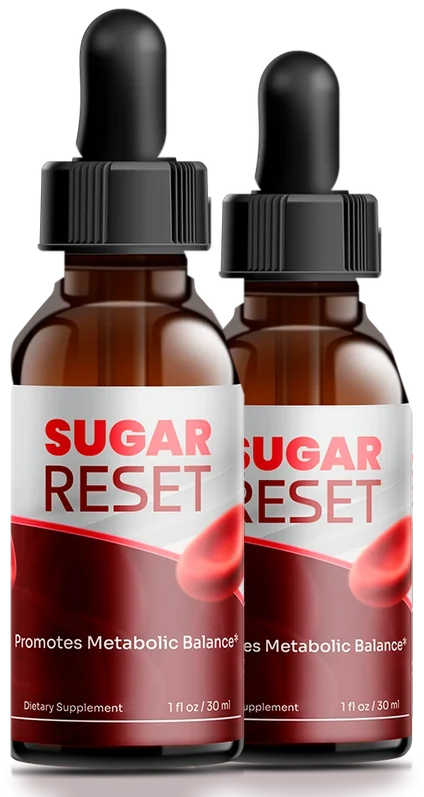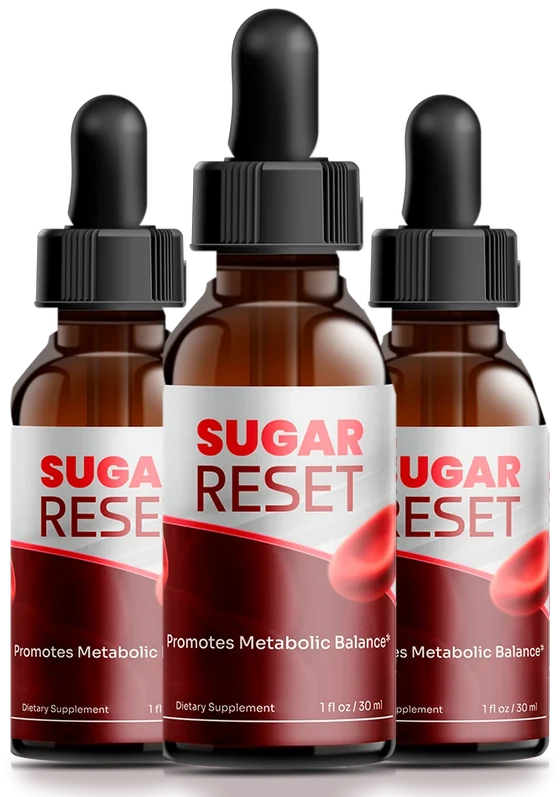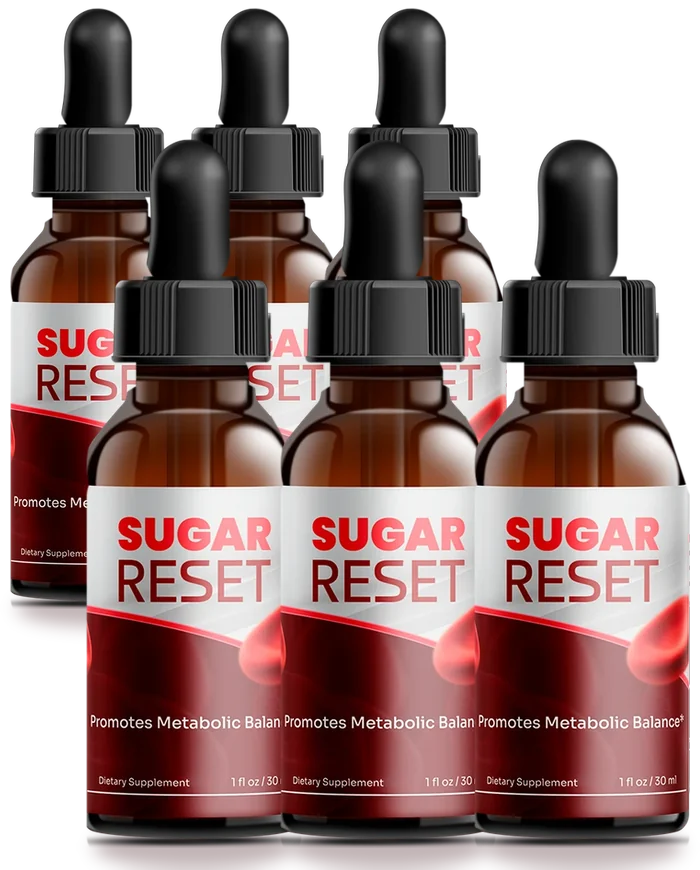
What are the ingredients in Sugar Reset?
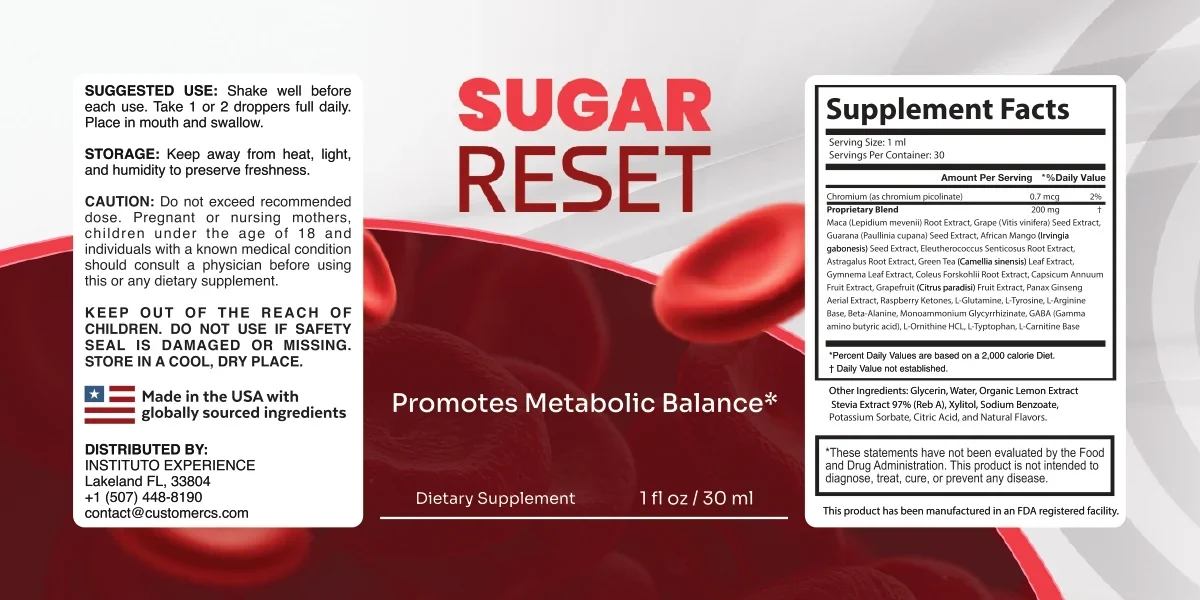
The label lists chromium (as chromium picolinate) at 0.7 mcg, outside the blend, and a 200 mg proprietary blend of 22 ingredients with no single amounts. The blend starts with maca root, grape seed and guarana and ends with L-ornithine, L-tryptophan and L-carnitine.
The liquid base is glycerin, water, organic lemon extract, stevia extract, xylitol, sodium benzoate, potassium sorbate, citric acid and natural flavors. The seller's notes and the sales page highlight six ingredients: chromium, gymnema, African mango, green tea, maca and Panax ginseng. All six are on the label, but so are 17 more, including guarana, grapefruit extract, coleus, a licorice compound and eight amino acids. The label wins, and this page covers all 23.
Why does the order on the label matter?
Because it is the only clue to how much of each ingredient is in the blend. Federal labeling rules allow a proprietary blend to show only its total weight, as long as its ingredients are listed from most to least by weight.[1]
So maca, listed first, is the largest share of the 200 mg, and L-carnitine, listed last, the smallest. Gymnema, often described as the key ingredient, is eighth; Panax ginseng is twelfth. Nothing tells you the gap between one position and the next: the first ingredient could be most of the blend or just slightly more than the second. Our blend page explains what the order can and cannot tell you.
| Position | Ingredient | Group |
|---|---|---|
| Outside blend | Chromium (as chromium picolinate), 0.7 mcg | May lower blood sugar |
| 1 | Maca root extract | Plant extract |
| 2 | Grape seed extract | Plant extract |
| 3 | Guarana seed extract | Caffeine source |
| 4 | African mango seed extract | Plant extract |
| 5 | Eleutherococcus root extract | Heart medicine caution |
| 6 | Astragalus root extract | Medicine interactions |
| 7 | Green tea leaf extract | Liver reports; caffeine |
| 8 | Gymnema leaf extract | May lower blood sugar |
| 9 | Coleus forskohlii root extract | Blood pressure |
| 10 | Capsicum fruit extract | Plant extract |
| 11 | Grapefruit fruit extract | Medicine interactions |
| 12 | Panax ginseng aerial extract | May lower blood sugar |
| 13 | Raspberry ketones | Plant compound |
| 14 to 22 | L-glutamine, L-tyrosine, L-arginine, beta-alanine, monoammonium glycyrrhizinate, GABA, L-ornithine HCl, L-tryptophan, L-carnitine | Amino acids and compounds |
Which ingredients are linked with blood sugar?
Three: chromium, gymnema and Panax ginseng. NIH's Office of Dietary Supplements says chromium studies on blood sugar are mixed and that chromium with insulin or other diabetes medicines might cause low blood sugar.[2]
NCCIH says ginseng may lower blood sugar and that people with diabetes should consult a provider first, and gymnema is traditionally used for diabetes. If you take a diabetes medicine, these three are the reason to ask your care team before you start. Our pages on chromium, gymnema and Panax ginseng cover each.
Which ingredients contain caffeine?
Guarana seed extract and green tea leaf extract. LiverTox says guarana seeds contain 2 to 8% caffeine, more than coffee beans.[3] The label does not print the caffeine amount per serving.
Guarana is third in the blend and green tea seventh. If you already drink coffee, tea or cola, the drops add an unknown amount on top. Our caffeine page explains how to count your daily total and who should be careful.
Which ingredient has the most serious caution?
Green tea extract, for the liver. LiverTox rates it a well-established cause of clinically apparent liver injury, while saying such injury is rare.[4]
The amount here is unknown. Most people never have a liver problem, but the warning signs are worth knowing: dark urine, yellow skin or eyes, pain in the upper right belly, pale stools and unusual tiredness. Stop and call a doctor the same day if you notice any. Our green tea extract page and liver page explain.
Which ingredients matter for medicines?
Several. Grapefruit extract can matter for medicines with a grapefruit warning; eleuthero for digoxin; ginseng and coleus for blood thinners; coleus and the licorice compound for blood-pressure medicines; chromium and tyrosine for thyroid medicine; tryptophan and tyrosine for antidepressants; astragalus for immune-suppressing medicines.
The amounts are unknown, so nobody can say how strong any interaction would be. Bring the label to your pharmacist. Our medicines page groups the questions by medicine.
- Diabetes medicines: chromium, gymnema, ginseng.
- Statins and grapefruit-warning medicines: grapefruit, green tea.
- Blood-pressure and heart medicines: coleus, licorice compound, caffeine.
- Digoxin: eleuthero.
- Thyroid medicine: chromium, tyrosine.
- Mood medicines: tryptophan, tyrosine.
What are the amino acids for?
The label does not say. L-glutamine, L-tyrosine, L-arginine, beta-alanine, GABA, L-ornithine, L-tryptophan and L-carnitine are common in sports and mood products, and none is shown in our sources to help blood sugar.
They sit at the end of the blend, so their shares are the smallest. MedlinePlus links L-tryptophan supplements to a 1989 outbreak of eosinophilia-myalgia syndrome and says it can add to serotonin from some medicines. Mount Sinai says people taking MAO inhibitors or with thyroid conditions should ask before taking tyrosine. NIH's weight fact sheet lists nausea, diarrhea and a fishy body odor for L-carnitine at higher doses.
What is in the liquid base?
Glycerin and water, sweetened with stevia extract and xylitol, flavoured with organic lemon extract and natural flavors, and preserved with sodium benzoate, potassium sorbate and citric acid.
The base matters for two reasons. Xylitol is dangerous for dogs, according to the FDA, so keep the bottle out of their reach. And the preservatives sit awkwardly beside the seller's "100% Natural Ingredients" badge. Our liquid base page explains each one.
Blend explorer: all 23 named ingredients
ToolTap an ingredient to read what the cited sources say about it. Filter by caution group. Numbers follow the label order: 1 is the largest share of the 200 mg blend, 22 the smallest. No single amount is printed except chromium.
Which ingredients are plant extracts, and which are not?
Thirteen of the 22 blend items are plant extracts or plant compounds: maca, grape seed, guarana, African mango, eleuthero, astragalus, green tea, gymnema, coleus, capsicum, grapefruit, Panax ginseng and raspberry ketones. The other nine are amino acids or related compounds, plus the licorice compound glycyrrhizinate.
Plant extracts vary a great deal. The same plant can be made into a weak or a strong extract, from the root, leaf, seed or fruit, with or without standardization to a named compound. The label names the plant part for most of them, such as "root", "seed", "leaf", "fruit" or "aerial", but not the strength. That is why two products with the same ingredient list can differ a lot. NCCIH reminds shoppers that what a supplement contains can differ from its label.[5]
| Plant part named on the label | Ingredients |
|---|---|
| Root | Maca, eleuthero, astragalus, coleus |
| Seed | Grape, guarana, African mango |
| Leaf | Green tea, gymnema |
| Fruit | Capsicum, grapefruit |
| Aerial (leaves and stems) | Panax ginseng |
| Not a plant part | Raspberry ketones, amino acids, glycyrrhizinate |
Which ingredients have no information in our sources?
Grape seed extract, L-glutamine, L-arginine, beta-alanine, GABA and L-ornithine are not covered by the sources we cite. That does not mean they are unsafe; it means we cannot tell you what is known about them from the sources we use.
We prefer to say so plainly rather than fill the gap with guesses. If any of these matters to you, for example because you take a blood thinner, a blood-pressure medicine or a sports supplement with the same amino acids, ask your pharmacist. A pharmacist has access to interaction databases that cover far more than the reference pages we cite.
Does the ingredient list change between batches?
It should not, but we cannot confirm it. The label we read came with the seller's assets. Compare the panel on your own bottle with the one on this page when it arrives.
If your bottle lists different ingredients, a different order or different amounts, it is a different formula, whatever the name on the front. Do not take it, and contact the seller. Our bottle check page lists every line to compare. The seller's notes mention a lot code and a certificate of analysis for the batch; ask for the certificate if you want the actual amounts.
Why does the sales page list only six?
We cannot know the seller's reasons. The six it highlights are the ones with the most familiar names in blood sugar and weight marketing.
Listing only six makes the product look simpler than it is. It also leaves out the ingredients a pharmacist would most want to know about: guarana for caffeine, grapefruit for interactions, coleus and the licorice compound for blood pressure, and L-tryptophan for serotonin. Always read the full panel on the bottle, not the highlights on a sales page. Our supplement facts page reproduces it.
Do the ingredient photos match?
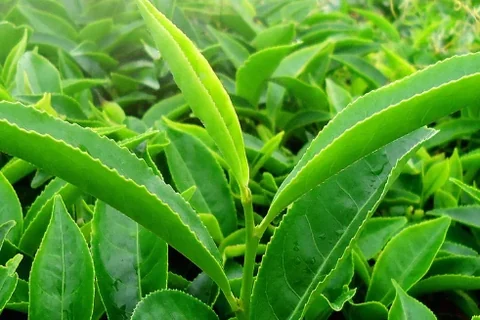
Mostly. The seller supplied photos for gymnema, African mango, green tea, maca and ginseng, and one photo of a red powder that matches no ingredient on the label, which we do not use.
The ginseng photo shows roots, but the label lists Panax ginseng aerial extract, made from leaves and stems, so we note that on the ginseng page. The African mango photo shows the fruit on the tree, while the label lists the seed extract. We use photos only to show what a plant looks like, not as evidence of anything.
Frequently asked questions
How many ingredients are in Sugar Reset?
The label names 23 actives: chromium plus 22 in the blend. The liquid base adds nine more.
What is the main ingredient in Sugar Reset?
Maca root extract is listed first in the blend, which means the largest share by weight. Its amount is not printed.
Does Sugar Reset contain sugar?
The label lists no sugar. It is sweetened with stevia extract and xylitol.
Is there cinnamon or berberine in Sugar Reset?
No. Neither appears on the label.
Does Sugar Reset contain gluten or dairy?
The label lists no gluten or dairy ingredient but gives no allergen statement. Ask the seller about shared equipment.
Medical review: Dr. Andres Palacio, MD, Endocrinologist. Name and designation supplied by the site owner; not independently verified. Safety lines also cite NIH, FDA, MedlinePlus and FTC pages. How review works.
Sources
- FDA: Dietary Supplement Labeling Guide: Chapter IV, Nutrition Labeling. www.fda.gov
- NIH Office of Dietary Supplements: Chromium: Fact Sheet for Consumers. ods.od.nih.gov
- NIH LiverTox: Guarana. www.ncbi.nlm.nih.gov
- NIH LiverTox: Green Tea. www.ncbi.nlm.nih.gov
- NCCIH: Using Dietary Supplements Wisely. www.nccih.nih.gov
Safety: Sugar Reset Drops is a dietary supplement, not a medicine, and not a diabetes medicine. Follow your bottle's label: 1 or 2 droppers a day, with 1 ml as one serving. Never stop or change insulin or any diabetes medicine on your own; chromium, gymnema and ginseng may add to them and cause low blood sugar. The blend includes caffeine sources (guarana, green tea) and grapefruit extract, which can matter with some medicines. Green tea extract has been linked to liver injury: stop and call a doctor if you notice dark urine, yellow skin or eyes, or upper belly pain. The liquid contains xylitol, which is dangerous for dogs. Not for pregnancy, nursing or anyone under 18; ask your doctor first if you take any medicine or have a heart, blood pressure, kidney, liver or thyroid condition.
This site is an independent information site, not the manufacturer of Sugar Reset Drops. We may earn from order links on this site; order links are marked sponsored. *These statements have not been evaluated by the Food and Drug Administration. This product is not intended to diagnose, treat, cure or prevent any disease. Page updated November 26, 2026.