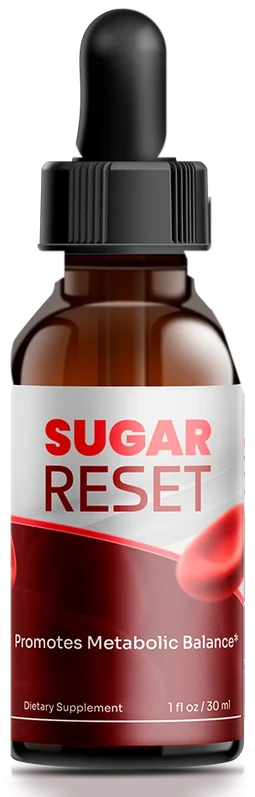
What is the Sugar Reset proprietary blend?
It is a group of 22 ingredients that together weigh 200 mg per 1 ml serving, listed on the label without an amount for any one of them. Only chromium, outside the blend, has a printed amount: 0.7 mcg.
Federal labeling rules allow a proprietary blend to show only its total weight, provided the ingredients are listed in order of weight, from most to least.[1] That keeps the formula private, but it leaves buyers, pharmacists and doctors unable to judge the dose of any ingredient. For a product with caffeine sources, a liver-caution extract and several ingredients that may interact with medicines, that gap matters.
| Fact | What it means |
|---|---|
| 22 ingredients in the blend | Many items share a small total |
| 200 mg per 1 ml | About 9 mg each if split evenly; it is not |
| Listed by weight | First is largest, last is smallest |
| No single amounts | Doses cannot be compared with studies |
| Daily Value not established | No reference amounts exist for these items |
What does the order tell me?
It tells you which ingredients are larger shares and which are smaller, but not by how much. Maca root extract, first, is the largest share; grape seed, guarana and African mango follow; L-carnitine, last, is the smallest.
Nothing tells you the gaps. Maca could be 150 mg of the 200, or 15 mg, as long as no later ingredient is heavier. The last ingredients could be a few milligrams or a fraction of one. So the order rules out some guesses, for example that the eighth ingredient, gymnema, is the main one by weight, but it does not let you work out any amount. Our ingredients page shows the full order.
- Maca root extract.
- Grape seed extract.
- Guarana seed extract.
- African mango seed extract.
- Eleutherococcus root extract.
- Astragalus root extract.
- Green tea leaf extract.
- Gymnema leaf extract.
- Coleus forskohlii root extract.
- Capsicum fruit extract.
- Grapefruit fruit extract.
- Panax ginseng aerial extract.
- Raspberry ketones.
- L-glutamine.
- L-tyrosine.
- L-arginine base.
- Beta-alanine.
- Monoammonium glycyrrhizinate.
- GABA.
- L-ornithine HCl.
- L-tryptophan (spelled "L-Typtophan" on the label).
- L-carnitine base.
Why does the amount of each ingredient matter?
Because effect and safety both depend on dose. An ingredient that does something at 500 mg may do nothing at 5 mg, and one that is harmless at 5 mg may not be at 500 mg.
For this blend, the unknown amounts touch every caution. Nobody can say how much caffeine guarana and green tea add. Nobody can compare the green tea extract with the amounts in liver case reports. Nobody can tell a person on insulin how much gymnema or ginseng might add to their medicine. NCCIH notes that what a supplement contains can differ from its label, which is another reason a certificate of analysis would help.[2]
What are the plant extracts in the blend?
Thirteen of the 22: maca, grape seed, guarana, African mango, eleuthero, astragalus, green tea, gymnema, coleus forskohlii, capsicum, grapefruit, Panax ginseng and raspberry ketones, which are a plant compound.
The label names the plant part for most of them, root, seed, leaf, fruit or aerial, but not the extract's strength. Several have their own pages: green tea extract, gymnema, Panax ginseng, African mango and maca. For the others, the explorer below shows what the sources say.
Blend explorer: all 23 named ingredients
ToolTap an ingredient to read what the cited sources say about it. Filter by caution group. Numbers follow the label order: 1 is the largest share of the 200 mg blend, 22 the smallest. No single amount is printed except chromium.
What do the sources say about eleuthero and astragalus?
Eleuthero, fifth in the blend and sometimes sold as Siberian ginseng, is not true ginseng. Memorial Sloan Kettering says it can raise the risk of side effects from the heart medicine digoxin and can falsely raise digoxin blood tests.[3]
Astragalus, sixth, is a traditional Chinese herb. NCCIH says there is not enough reliable evidence to know whether it helps any condition, that people with autoimmune diseases should avoid it, and that it may interact with medicines that suppress the immune system.[4] If you take digoxin or an immune-suppressing medicine, or have an autoimmune condition, ask your doctor before you start.
What do the sources say about coleus, capsicum and raspberry ketones?
All three are common in weight products, and the evidence is thin. NIH's fact sheet on weight-loss supplements says coleus has very limited human evidence, capsicum reduced appetite but not weight in studies, and raspberry ketones have been studied only with other ingredients.
Memorial Sloan Kettering says forskolin, from coleus, may lower blood pressure and slow the heart rate, may affect platelets, and should be avoided with polycystic kidney disease. The NIH fact sheet lists stomach distress for capsicum at higher amounts. Our blood pressure page covers coleus in detail.
| Ingredient | Position | What our sources say |
|---|---|---|
| Coleus forskohlii | 9 | May lower blood pressure; very limited evidence |
| Capsicum | 10 | Appetite, not weight; stomach distress |
| Grapefruit | 11 | Can change how some medicines work |
| Raspberry ketones | 13 | Not well studied |
What do the sources say about grapefruit extract?
The FDA says grapefruit and grapefruit juice can change how some medicines work, including some statins, some blood-pressure drugs, some heart-rhythm drugs, some anti-anxiety drugs, some transplant drugs and some antihistamines.
We do not know whether a small extract in a 200 mg blend acts like a glass of juice. If your medicine carries a grapefruit warning, ask your pharmacist before you take any product that lists grapefruit. Our medicines page covers this.
What are the amino acids in the blend?
L-glutamine, L-tyrosine, L-arginine, beta-alanine, GABA, L-ornithine, L-tryptophan and L-carnitine, plus monoammonium glycyrrhizinate, a licorice compound. They are the last nine items, so they are the smallest shares.
MedlinePlus says L-tryptophan supplements were linked in 1989 to eosinophilia-myalgia syndrome, that L-tryptophan might increase serotonin and should be used with caution alongside serotonin medicines, and that with sedatives it might cause too much sleepiness.[5] Mount Sinai says tyrosine helps make thyroid hormone and dopamine, and that people taking MAO inhibitors or with thyroid conditions should ask first. NCCIH says glycyrrhizin can cause serious effects in some people. The others are not covered by our sources.
What can a pharmacist do with a blend like this?
Quite a lot, even without the amounts. A pharmacist can check each named ingredient against your medicines, flag the ones with known interactions and tell you which questions matter most for you.
What a pharmacist cannot do is say how strong an interaction would be, because that depends on dose. For a medicine with a narrow safety margin, such as insulin, warfarin, digoxin or lithium, the cautious answer may be "avoid it" simply because the amounts are unknown. For a person who takes no medicines, the answer may be "probably fine, but watch the caffeine". Bring the bottle or a clear photo of the panel, and a full list of what you take. Our safety page lists the cautions a pharmacist is likely to raise.
| A pharmacist can | A pharmacist cannot |
|---|---|
| Check each named ingredient against your medicines | Say how much of each is in a dropper |
| Flag known interactions | Judge how strong an interaction would be |
| Suggest questions for your doctor | Compare the dose with studies |
| Advise on spacing and timing | Confirm the caffeine amount |
Why do so many products use blends?
Blends keep a formula private, let a label list many ingredients in a small space and avoid printing amounts that buyers might compare unfavourably with studies. Those are commercial reasons, not health ones.
From a buyer's side, the trade-off is clear: more ingredients named, less information about each. When you compare products, a label that prints every amount gives you more to go on than one that prints a single total. That does not make every blend a bad product, but it does make it harder to know what you are taking.
Is a proprietary blend a sign of a bad product?
Not by itself. Many supplements use blends, and the format is legal. But a blend with 22 items and one total does make it impossible to check the dose, and that is a real drawback for a product people may take alongside medicines.
A product that prints every amount lets you and your pharmacist check it. A product that prints a blend asks you to trust the maker. If you want to trust less and check more, ask the seller for a certificate of analysis for your batch; the seller's notes say one exists.
What should I ask the seller?
Ask for the amount of each blend ingredient per 1 ml, the caffeine per 1 ml, the strength of the green tea, gymnema and ginseng extracts, and the volume of one full dropper. Ask for a certificate of analysis for the lot on your bottle.
Send the request to the order desk at [email protected] and keep the reply. If the seller answers, a pharmacist can compare the amounts with the doses in the sources. If the seller does not, count that as part of your decision.
Frequently asked questions
How much maca is in Sugar Reset?
The label does not say. Maca is listed first in the 200 mg blend, so it is the largest share.
How much gymnema is in Sugar Reset?
The label does not say. Gymnema is eighth of 22 in the blend.
Is a proprietary blend legal on Sugar Reset?
Yes. The rules allow a blend to show only its total weight if the ingredients are listed by weight.
Can I get the Sugar Reset blend amounts?
Ask the seller for a certificate of analysis. The seller's notes say one exists for the batch.
Does the Sugar Reset blend contain stimulants?
It contains guarana and green tea extract, both caffeine sources. The caffeine amount is not printed.
Medical review: Dr. Andres Palacio, MD, Endocrinologist. Name and designation supplied by the site owner; not independently verified. Safety lines also cite NIH, FDA, MedlinePlus and FTC pages. How review works.
Sources
- FDA: Dietary Supplement Labeling Guide: Chapter IV, Nutrition Labeling. www.fda.gov
- NCCIH: Using Dietary Supplements Wisely. www.nccih.nih.gov
- Memorial Sloan Kettering: Siberian Ginseng (eleuthero). www.mskcc.org
- NCCIH: Astragalus. www.nccih.nih.gov
- MedlinePlus: L-tryptophan. medlineplus.gov
Safety: Sugar Reset Drops is a dietary supplement, not a medicine, and not a diabetes medicine. Follow your bottle's label: 1 or 2 droppers a day, with 1 ml as one serving. Never stop or change insulin or any diabetes medicine on your own; chromium, gymnema and ginseng may add to them and cause low blood sugar. The blend includes caffeine sources (guarana, green tea) and grapefruit extract, which can matter with some medicines. Green tea extract has been linked to liver injury: stop and call a doctor if you notice dark urine, yellow skin or eyes, or upper belly pain. The liquid contains xylitol, which is dangerous for dogs. Not for pregnancy, nursing or anyone under 18; ask your doctor first if you take any medicine or have a heart, blood pressure, kidney, liver or thyroid condition.
This site is an independent information site, not the manufacturer of Sugar Reset Drops. We may earn from order links on this site; order links are marked sponsored. *These statements have not been evaluated by the Food and Drug Administration. This product is not intended to diagnose, treat, cure or prevent any disease. Page updated November 26, 2026.