What does the Sugar Reset label actually claim?
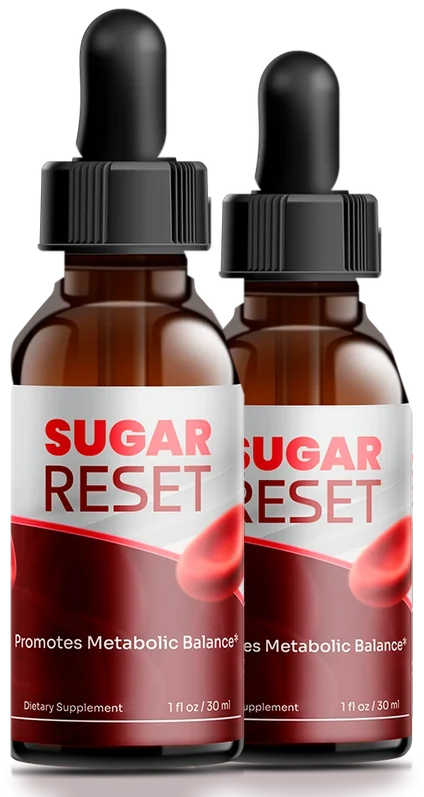
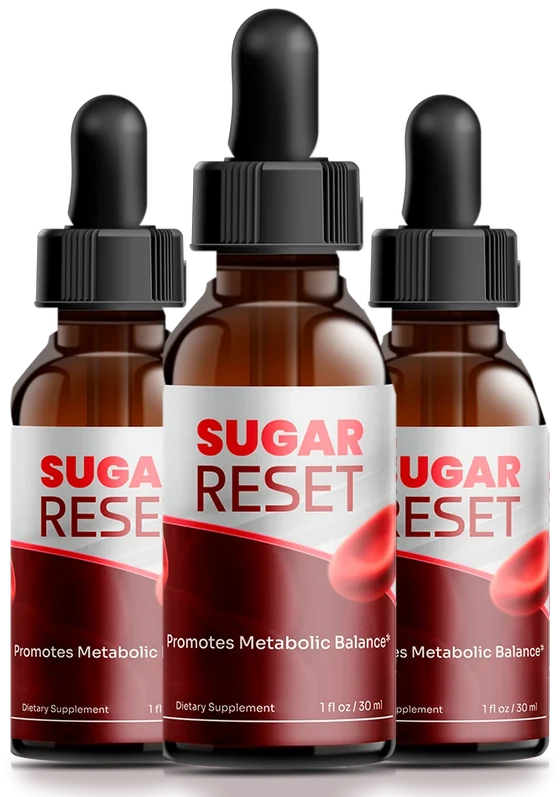
The bottle makes one claim: "Promotes Metabolic Balance*". The asterisk points to the FDA statement that the claim has not been evaluated by the FDA and that the product is not intended for any disease.
Everything else on the label is description: the name, the size, the Supplement Facts panel, the directions, the cautions and the distributor. The FDA explains that a supplement may carry a structure or function claim like this one only with that disclaimer, and may not claim to diagnose or deal with a disease.[1] "Metabolic balance" is not a medical term with a fixed meaning, which is one reason such phrases appear on supplement labels. It does not mention blood sugar, insulin or diabetes. Those words come from the sales page, not the bottle.
| Where | Claim | Status |
|---|---|---|
| Bottle front | "Promotes Metabolic Balance*" | Structure or function wording with the FDA asterisk |
| Bottle back | "Made in the USA with globally sourced ingredients" | Unverified origin statement |
| Bottle back | "manufactured in an FDA registered facility" | Registration is not approval |
| Seller badges | "GMP", "Registered FDA Facility", "GMO Free", "100% Natural Ingredients", "Dairy Free" | Unverified; no certificates |
| Sales page | Diabetes, insulin, weight and pancreas claims | Not repeated; disease claims |
What does "FDA registered facility" mean?
It means the facility has told the FDA it exists, which is a notice, not an approval. The FDA says registration of an establishment does not denote approval.[2]
The rule itself is plain: assigning a registration number does not convey FDA approval or endorsement of a facility or its products.[3] A facility that registers is on a list; whether it makes good products depends on what it does, and that is checked, if at all, by inspection. So the label line "manufactured in an FDA registered facility" and the seller's "Registered · FDA · Facility" badge tell you at most where a bottle was made, and nothing about its quality or whether it suits you. The FDA does not approve dietary supplements before they are sold.[4]
What does a "GMP" seal mean?
It is a claim that the maker follows the FDA's current manufacturing rules, which every supplement maker in the United States must do by law. So a seal describes a legal minimum, not an award.
The Department of Defense's Operation Supplement Safety says seals such as "Certified GMP" or "FDA approved facility" should not be taken as signs of safety or federal approval.[5] A real third-party certificate names the certifier, the facility, the products and the dates, and can be checked with the certifier. The seller supplied a "Good Manufacturing Practice · GMP" badge image with no certificate. We show it only as printed and mark it unverified.
What about "100% Natural Ingredients"?
It is a seller badge, not a label line, and it sits awkwardly beside the label. The other ingredients include xylitol, sodium benzoate, potassium sorbate and citric acid, which are common in liquid supplements but are not what most people picture as natural.
Natural also does not mean safe. NCCIH reminds shoppers that natural does not always mean safe and that what a supplement contains can differ from its label.[6] Green tea extract is natural and is a well-established, if rare, cause of liver injury. Guarana is natural and is a strong source of caffeine. We show the badge as printed and do not repeat it as a fact.
- Natural does not mean safe.
- The liquid base includes preservatives and a sugar alcohol.
- Plant extracts can interact with medicines.
- The badge came with no certificate or definition.
What about "Made in the USA"?
The label says "Made in the USA with globally sourced ingredients". The FTC explains that an unqualified claim of that kind means all or virtually all of the product was made in the United States.[7]
The label's own wording is qualified: it says the ingredients are sourced globally. That is more careful than an unqualified badge. We have no document showing where the bottle was filled or where each ingredient came from, so we report the wording as printed. If origin matters to you, ask the order desk where the product is manufactured and bottled, and keep the reply.
What do the "GMO Free" and "Dairy Free" seals mean?
They are seller badges with no certificate. The label lists no dairy ingredient and makes no statement about genetic modification, so the seals add a claim the bottle does not make.
A GMO claim on a supplement usually needs a certifier or a documented supply chain to mean much. A dairy-free claim matters to people with milk allergy, and the label does list its ingredients in full: glycerin, water, organic lemon extract, stevia extract, xylitol, sodium benzoate, potassium sorbate, citric acid and natural flavors, plus the actives. If you have an allergy, ask the order desk about shared equipment, because the label gives no allergen statement either way.
 “Good Manufacturing Practice · GMP”
 “Registered · FDA · Facility”
 “Genetically Modified Organism · GMO · Free”
 “100% Natural Ingredients”
 “Dairy Free”
 “100% Support Guaranteed”
Badges supplied by the seller, quoted as printed and unverified. None came with a certificate. A registered facility is not an FDA approval, and the "100% Natural Ingredients" seal sits beside a label that lists xylitol, sodium benzoate and potassium sorbate. What each badge would need to mean.
Which sales-page claims do we never repeat?
We never repeat the sales page's lines about type 2 diabetes, insulin, weight or the pancreas, or its line that no significant side effects have been reported. Several of those are disease claims that a supplement may not make.
The FDA and FTC sent warning letters in 2021 to companies illegally selling dietary supplements with diabetes claims.[8] The FDA also warns that such products can lead people to delay or stop effective care. The side-effect line is not consistent with the sources on green tea extract, guarana, L-tryptophan and other ingredients. We also do not repeat the crossed-out prices, the "you save" figures or the countdown clock.
| Sales-page wording (summarized) | Why we do not repeat it |
|---|---|
| Helps with type 2 diabetes | A disease claim; not allowed for supplements |
| Supports insulin | Not shown for this blend in our sources |
| Reduces "belly fat" | Weight claim the label does not make |
| "Regenerating" cells in the pancreas | Unsupported, and a disease claim |
| "No significant side effects" | Contradicted by the sources |
Why does the label say "metabolic balance" and not "blood sugar"?
We cannot know the maker's reasons. What we can say is that a blood sugar claim would invite closer scrutiny, while a general phrase with the FDA asterisk is common on supplement labels.
That gap between the bottle and the ad is worth noticing. The bottle is the document the maker is responsible for; the sales page is marketing. When the two differ, read the bottle. Our blood sugar page explains what the ingredients may and may not do, and our evidence page sets out the studies behind each one.
Why do supplement labels use asterisks at all?
Because the law lets a supplement describe how an ingredient affects the body's structure or function, but only with a disclaimer that the FDA has not evaluated the claim. The asterisk links the claim to that disclaimer.
The rule is a trade-off. Makers can say something about what a product is for without proving it to the FDA first, and buyers get a printed warning that nobody has checked. In practice, an asterisk is a signal to read the claim as marketing rather than as a finding. On this bottle there is one asterisk, on one claim. The sales page has many more claims and no asterisks, which is another reason to trust the bottle over the page.
| Label element | What it means |
|---|---|
| Claim with an asterisk | Not evaluated by the FDA |
| FDA statement in a box | Not intended for any disease |
| Dagger beside the blend | Daily Value not established |
| No asterisk, no claim | Plain description, such as the size |
Can a label claim be checked?
A few can. You can check the serving size, the ingredients and the distributor against the bottle you receive. You cannot check "metabolic balance", the badges or the origin statement without documents from the seller.
Ask the order desk for the certificate of analysis that the seller's notes say exists for the batch, and for any certificate behind the badges. If they send them, compare the lot number with your bottle. If they cannot, read the badges as seller images and nothing more.
How do I check a claim I saw in an ad?
Compare it with the label first. If the label does not make the claim, the ad is going further than the maker's own bottle. Then check it against the FDA and FTC rules.
The FTC says health claims need competent and reliable scientific evidence.[9] A claim about a disease, a fast result or a guaranteed outcome is a red flag. A claim that an agency approved the product is false for any dietary supplement. The decoder below checks common wording.
Ad-claim decoder
ToolSaw an ad for these drops or a look-alike? Pick a sample or type the claim. The decoder compares it with FDA and FTC rules and with what the bottle label actually lists.
What would a more useful label show?
A more useful label would print the amount of each blend ingredient, the caffeine per serving and the volume one dropper holds. With those three facts, a buyer and a pharmacist could judge the dose.
Federal labeling rules allow a proprietary blend to show only its total weight, as long as the ingredients are listed from most to least by weight.[10] That is legal, but it leaves the buyer guessing. Our blend page explains what the order can and cannot tell you, and our supplement facts page shows the panel in full. You can ask the seller for a certificate of analysis; the seller's notes say one exists for the batch.
Frequently asked questions
Did the FDA approve Sugar Reset before sale?
No. The FDA does not approve dietary supplements before sale, and a registered facility is not an approval.
What does "Promotes Metabolic Balance" mean on Sugar Reset?
It is general structure or function wording, marked with the FDA asterisk. It is not a claim about blood sugar or any disease.
Are the Sugar Reset badges certified?
No certificate came with any badge. We show them as printed and unverified.
Is Sugar Reset really natural?
The actives are plant extracts and amino acids, but the liquid base includes xylitol and preservatives. Natural does not mean safe.
Does the Sugar Reset label list allergens?
It gives no allergen statement. Read the full ingredient list and ask the order desk about shared equipment.
Medical review: Dr. Andres Palacio, MD, Endocrinologist. Name and designation supplied by the site owner; not independently verified. Safety lines also cite NIH, FDA, MedlinePlus and FTC pages. How review works.
Sources
- FDA: Structure/Function Claims. www.fda.gov
- FDA: Is It Really "FDA Approved"?. www.fda.gov
- 21 CFR § 1.242: What does assignment of a registration number mean?. www.law.cornell.edu
- FDA: Dietary Supplements: How FDA Helps Keep You Safe (May 2022). www.fda.gov
- Operation Supplement Safety (DoD): CGMP/GMP seals: what do they mean?. www.opss.org
- NCCIH: Using Dietary Supplements Wisely. www.nccih.nih.gov
- FTC: Complying with the Made in USA Standard. www.ftc.gov
- FDA: FDA and FTC Send Warning Letters to 10 Companies for Illegally Selling Dietary Supplements Claiming to Treat Diabetes. www.fda.gov
- FTC: Health Products Compliance Guidance. www.ftc.gov
- FDA: Dietary Supplement Labeling Guide: Chapter IV, Nutrition Labeling. www.fda.gov
Safety: Sugar Reset Drops is a dietary supplement, not a medicine, and not a diabetes medicine. Follow your bottle's label: 1 or 2 droppers a day, with 1 ml as one serving. Never stop or change insulin or any diabetes medicine on your own; chromium, gymnema and ginseng may add to them and cause low blood sugar. The blend includes caffeine sources (guarana, green tea) and grapefruit extract, which can matter with some medicines. Green tea extract has been linked to liver injury: stop and call a doctor if you notice dark urine, yellow skin or eyes, or upper belly pain. The liquid contains xylitol, which is dangerous for dogs. Not for pregnancy, nursing or anyone under 18; ask your doctor first if you take any medicine or have a heart, blood pressure, kidney, liver or thyroid condition.
This site is an independent information site, not the manufacturer of Sugar Reset Drops. We may earn from order links on this site; order links are marked sponsored. *These statements have not been evaluated by the Food and Drug Administration. This product is not intended to diagnose, treat, cure or prevent any disease. Page updated November 26, 2026.