How much Panax ginseng is in Sugar Reset?
The label does not say. "Panax Ginseng Aerial Extract" is the twelfth of 22 ingredients in the 200 mg proprietary blend, with no amount or extract strength printed.
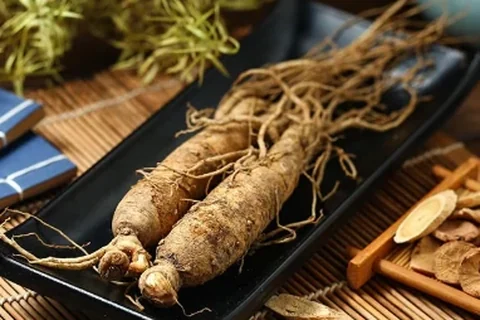
Two details matter. First, it is twelfth, so at least 11 ingredients weigh as much or more; blends list ingredients from most to least by weight.[1] Second, "aerial" means the extract is made from the parts above ground, the leaves and stems, not the root that most ginseng products and studies use. The seller's ingredient photo shows roots; the label lists an aerial extract. We note that difference rather than hide it.
| Fact | Detail |
|---|---|
| Label name | Panax Ginseng Aerial Extract |
| Plant part | Aerial (leaves and stems) |
| Position in the blend | 12th of 22 |
| Amount | Not stated |
| Also known as | Asian ginseng, Korean ginseng |
| Not the same as | Eleuthero (Siberian ginseng), also in this blend |
What is Panax ginseng?
Panax ginseng, also called Asian or Korean ginseng, is a plant with a long history in Asian traditional medicine. NCCIH covers it under the name Asian ginseng.
The blend also lists eleutherococcus root extract, often sold as Siberian ginseng, which is a different plant with different cautions. Memorial Sloan Kettering says eleuthero is not true ginseng. So this blend contains two plants called "ginseng" in marketing, at unknown amounts.
What does the research say about blood sugar?
It is limited and conflicting. NCCIH says a 2022 review found improvements in fasting blood glucose, cholesterol and some inflammatory markers in people with prediabetes or diabetes, but that evidence on blood sugar in diabetes overall is inconclusive and conflicting.[2]
NCCIH also says most ginseng trials are small, under 200 people, and short, under three months, and its page on diabetes supplements says no herbal supplement, ginseng included, has been proven effective.[3] Those studies used root preparations at known doses. An aerial extract at an unknown share of a 22-item blend cannot be matched to them. Our evidence page compares the ingredients.
Can ginseng affect diabetes medicines?
Yes. NCCIH says ginseng may lower blood sugar, so people with diabetes should consult a health care provider before using it.
This blend also lists chromium and gymnema, which may add to diabetes medicines too. If you take insulin or another medicine that lowers blood sugar, ask your care team before you start, and never stop or change your medicine because of a supplement. Our blood sugar page explains the signs of a low.
Can ginseng affect blood clotting?
Yes. NCCIH says ginseng may interfere with blood clotting and is a concern for people on blood thinners. The page does not name specific blood thinners, so ask your pharmacist or the clinic that monitors you.
The blend also lists coleus forskohlii, which Memorial Sloan Kettering says inhibits platelets in laboratory studies, and grape seed extract, which our sources do not cover. If you take warfarin or another blood thinner, or have a bleeding disorder, ask before you start. Tell your surgeon or dentist about the drops before any procedure. Our medicines page covers this.
- Blood thinners: ask first.
- Bleeding disorders: ask first.
- Surgery or dental work: tell the team.
- Other supplements that affect clotting: add up the risk.
What side effects are listed?
NCCIH says insomnia is the most common side effect of Asian ginseng, and lists rarer effects: severe rash, liver damage and severe allergic reactions. It also says ginseng may worsen autoimmune disorders.
The blend also contains caffeine from guarana and green tea, which can affect sleep too. If you notice trouble sleeping, take the drops in the morning, cut other caffeine or stop. Stop and get help for a severe rash, swelling or trouble breathing. Our side effects page lists the effects for every ingredient.
| Side effect | How common, per NCCIH |
|---|---|
| Insomnia | Most common |
| Severe rash | Rare |
| Liver damage | Rare |
| Severe allergic reaction | Rare |
| Worsening of autoimmune disorders | Possible |
Is ginseng safe in pregnancy?
NCCIH says some studies suggest oral ginseng may be unsafe in pregnancy, that one of its compounds caused birth defects in animals, and that some experts advise against it for pregnant or breastfeeding women.
NCCIH also advises against its use by infants and children. The label asks pregnant or nursing mothers and children under 18 to consult a physician. Do not start the drops while pregnant, trying to conceive or breastfeeding without your doctor. Our pregnancy page lists the other ingredients with cautions.
How long can ginseng be taken?
NCCIH says short-term oral use, up to about six months at recommended amounts, appears safe for most people, and that long-term safety has not been well established.
At one dropper a day, a 6-bottle pack lasts about 180 days, which reaches that limit. The amount of ginseng in each dropper is unknown, so the comparison is rough. If you plan to take the drops for months, tell your doctor and set a date to review whether to continue.
Why does "aerial" matter?
Because different parts of a plant can contain different amounts of its active compounds. Ginseng research mostly uses the root; the leaves and stems are a different material.
That does not mean the aerial extract is weaker or stronger, only that root studies do not describe it. The label is honest in naming the part; the seller's photo of roots is misleading if read as a picture of what is in the bottle. If the part matters to you, ask the seller for the extract specification. A specification would name the plant part, the extraction method, any standardization to ginsenosides, the compounds usually measured in ginseng, and the amount in each 1 ml serving. Without it, the only facts are the name, the part and the position in the blend.
What else does the research say about ginseng?
NCCIH reviews several other uses. Small studies suggest modest effects on thinking in middle-aged adults but not young adults; a 2023 review found a small benefit for general fatigue from ginseng alone; some research suggests oral ginseng may help sexual function; and most research finds no benefit for athletic performance.
None of those uses is a claim on this label, and the studies used root preparations at known doses. We mention them only to give a fair picture of what is and is not known about the plant. The label's only claim is "Promotes Metabolic Balance*", with the FDA asterisk. Our label claims page explains what that wording means.
| Use studied (per NCCIH) | Finding |
|---|---|
| Thinking and memory | Modest effects in middle-aged adults in small studies |
| General fatigue | Small benefit in a 2023 review |
| Blood sugar | Some fasting glucose findings; inconclusive overall |
| Sexual function | Some research suggests possible benefit |
| Athletic performance | Most research finds no benefit |
How does ginseng fit with the caffeine in the blend?
Both can affect sleep, and both are often described as making people feel more alert. Ginseng's most common side effect is insomnia, according to NCCIH, and caffeine from guarana and green tea can keep people awake too.
If you are sensitive to either, take the drops early in the day and cut back other caffeine. If you have trouble sleeping after you start, that is a reason to stop, not to push through. Poor sleep can itself affect blood sugar and blood pressure, which makes it harder to judge anything else. Our caffeine page explains how to count your caffeine.
What about autoimmune conditions?
NCCIH says ginseng may worsen autoimmune disorders. The blend also lists astragalus, which NCCIH says people with autoimmune diseases should avoid.
So this blend has two ingredients flagged for autoimmune conditions such as rheumatoid arthritis, lupus or multiple sclerosis. If you have one, or take a medicine that suppresses the immune system, ask your doctor before you start. Our blend page covers astragalus.
Is ginseng the reason the product is sold for blood sugar?
It is one of three ingredients with a blood sugar link in the sources, along with chromium and gymnema. The sales page highlights it.
On the label, though, ginseng is twelfth of 22 in the blend, with maca, grape seed, guarana and eight others before it. That position makes it unlikely to be a large share. The gap between how prominently ginseng is marketed and where it sits on the label is a useful reminder to read the panel. Our ingredients page shows the full order.
Who should be careful with ginseng?
Anyone on insulin or other diabetes medicines, anyone on a blood thinner, anyone with an autoimmune condition, anyone pregnant or breastfeeding, and anyone who takes several prescription medicines.
NCCIH warns that ginseng may interact with various medicines and advises checking with a provider before combining it with any prescription or over-the-counter drug. Our who it's for page sets out the full list. If you are unsure whether any of these applies to you, bring the label and your medicine list to a pharmacist; that short conversation is the most useful step you can take.
Frequently asked questions
Is the ginseng in Sugar Reset Korean ginseng?
The label says Panax ginseng, which includes Asian or Korean ginseng. It is an aerial extract, not root.
Does Sugar Reset ginseng lower blood sugar?
NCCIH says ginseng may lower blood sugar, with inconclusive evidence. The amount here is unknown.
Can Sugar Reset ginseng keep me awake?
Insomnia is the most common ginseng side effect, according to NCCIH, and the blend also has caffeine.
Is Sugar Reset ginseng safe with warfarin?
Ask the clinic that monitors you. Ginseng may interfere with clotting.
Why does the Sugar Reset ginseng photo show roots?
The seller supplied a root photo. The label lists an aerial extract, from leaves and stems.
Medical review: Dr. Andres Palacio, MD, Endocrinologist. Name and designation supplied by the site owner; not independently verified. Safety lines also cite NIH, FDA, MedlinePlus and FTC pages. How review works.
Sources
- FDA: Dietary Supplement Labeling Guide: Chapter IV, Nutrition Labeling. www.fda.gov
- NCCIH: Asian Ginseng. www.nccih.nih.gov
- NCCIH: Diabetes and Dietary Supplements. www.nccih.nih.gov
Safety: Sugar Reset Drops is a dietary supplement, not a medicine, and not a diabetes medicine. Follow your bottle's label: 1 or 2 droppers a day, with 1 ml as one serving. Never stop or change insulin or any diabetes medicine on your own; chromium, gymnema and ginseng may add to them and cause low blood sugar. The blend includes caffeine sources (guarana, green tea) and grapefruit extract, which can matter with some medicines. Green tea extract has been linked to liver injury: stop and call a doctor if you notice dark urine, yellow skin or eyes, or upper belly pain. The liquid contains xylitol, which is dangerous for dogs. Not for pregnancy, nursing or anyone under 18; ask your doctor first if you take any medicine or have a heart, blood pressure, kidney, liver or thyroid condition.
This site is an independent information site, not the manufacturer of Sugar Reset Drops. We may earn from order links on this site; order links are marked sponsored. *These statements have not been evaluated by the Food and Drug Administration. This product is not intended to diagnose, treat, cure or prevent any disease. Page updated November 26, 2026.